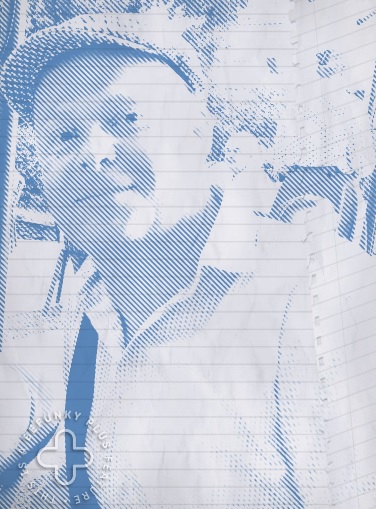
Dr. Igor Karača is a Bosnian-American composer and pianist of classical and jazz music. Most of Karača's work has been for chamber ensembles and electronic media. He employs a wide variety of techniques, ranging from controlled aleatoric, free-jazz inspired textures, to more traditional, neoclassical style; he usually aims to make his work accessible to a relatively large audience.
After taking private music lessons, Karača studied music at the Academy of Music in Sarajevo under Josip Magdić and Andjelka Bego-Simunić. He graduated in 1996 with a BM in music composition, and has since been a guest at different masterclasses in Europe, working with Boguslaw Schaeffer, Klaus Huber, Helmut Lachenmann, Marc-André Dalbavie and Marco Stroppa, among others.
In 1999 Karača came to United States to study composition with Dr. Thomas Wells at the Ohio State University, from which he received his DMA in 2005.
Igor Karača has written three symphonies, suite for wind ensemble, concertante works for clarinet and piano, thirty electro-acoustic compositions, over seventy chamber compositions, including the award-wining Wind Trio, Between Walls for violin, clarinet and piano, Filigree for saxophone, accordion, vibraphone and piano, and Handful of Dust for bass clarinet and piano. Karača composed dramatic scores for three motion pictures: A House Over the Rainbow, Sarajevo War Diary and Tell Me Your Name Again, and four theater plays: Twelfth Night, Fate of a Cockroach, As You Like It and Requiem for 'Bird' Parker.
Recent performances include premieres in the USA, Croatia, Ireland, Serbia, Switzerland and the Netherlands, and other performances in Austria, Bosnia-Herzegovina, France, Germany, Italy, Poland and Sweden.
He was a member of Sarajevo Jazz Quartet, jazz quintet Happy End and Bosnian pop-rock band Punkt, for which he played piano, Hammond organ and electronic keyboards.
Dr. Karača is teaching courses on music composition, jazz improvisation, orchestration, technology and theory at Oklahoma State University, Stillwater. He is a Visiting Full Professor of Music at Sarajevo Music Academy, Bosnia-Herzegovina.
News:
■ KARAČA'S NEW ELECTRO-ACOUSTIC ALBUM "Earthsong" (2023) available @
Blue Griffin!
You can preview, stream and purchase CDs and digital downloads on Spotify, Apple Music, Amazon Music, deezer, YouTube and TIDAL!.
■ KARAČA'S CHAMBER MUSIC ALBUMS "Handful of Dust" (2018) and "Suspended Motion" (2023) are now available @
Blue Griffin!
■ KARAČA'S NEW ELECTRO-ACOUSTIC ALBUM "Cenozoic" (2022) is now available @
Zenapolae netlabel!
Click here to listen.
■ CD "BRIGHT MOODS" | MILICA JELAČA JOVANOVIĆ
Journeys Through Time and Space Guided by the Piano Music of Bartók, Briggs, Karača, Prokofiev, Radić, Radovanović, Sommer
Click here for more info.
Now available here: Amazon and MSR Classics.
■ KARAČA'S ELECTRO-ACOUSTIC ALBUM "Rituelle" is available on Dark Winter label!
Click here for more info.
"Rituelle" is a long-form ambient exploration featuring muted, long-echoing, cloudy notes, fading from tonelessness into tone-clusters. This is a soundscape for contemplating exotic astrophysical phenomena: interstellar clouds, cosmic background radiation, and the musical event horizons of mysterious black holes.
■ IGOR'S TEXTBOOK "Uvod u muzičku tehnologiju" ("An Introduction to Music Technology") [December 2013] provides a clear and concise overview of the essential elements of music technology for today's musician. Publisher: University of Sarajevo.
Recent Performances:
■ "City Music," NASA Biennal Conference, Hattiesburg, MS
■ "Retracing I," Dublin, Ireland.
■ "Filigree," (OMTA Commissioned Composer), Stillwater, OK
■ "Piano Sonata," Bellingham, WA.
Upcoming Performances:
■ "Time Out of Joint," NASA Biennal Conference, Stillwater, OK
■ "Miserere," Sarajevo, BiH
■ "Dark Passageway," New York City Electroacoustic Music Festival, NY.
Sound Design:
■ Igor's drum and percussion kits, rhythmic patterns, synthesized sounds and effects for Propellerhead Reason Rack Extensions "BOOM 808," "Tick Tick," "CV Mutant," "Chip64" "Additive Oscillator" and "Table Oscillator" can be previewed here.
Compositions
Igor Karaca: voice, percussion, Korg MS-20 synthesizer, Pittsburgh Modular Foudation 3.1+ synthesizer, NI Reaktor, Reason 11.
"Om Bhur Bhuvas Suvaha
Tat Savitur Varenyam
Bhargo Devasya Dhimahi
Dhiyoyonah Prachodayyat"
were used as a basic material for the piece, and then translated - in a process similar to "Between Walls" below - into a modal stream of notes played on the saxophones. This mantra is known as the "mother of the Vedas".
Performed by the H2 Saxophone Quartet.
Click here for PDF
Performed by Dr. Laura Talbott (violin), prof. Babette Belter (clarinet) and Dr. Zarina Melik-Stepanova (Piano).
Click here for PDF